
For years, setup for a soundbar often meant dealing with tangled wires, unclear sound, and difficult positioning. That’s why I was excited to test the Sony S100F 2.0ch Soundbar Bass Reflex Speaker—it’s straightforward to install, delivers deep, immersive sound, and easily connects via Bluetooth or HDMI ARC. It’s perfect for small rooms because of its slim design and powerful bass reflex speaker, which fills the space without distortion. The voice enhancement feature really makes dialogue stand out, whether you’re watching movies or wrestling with conference calls.
After comparing it with other options, like the wireless Roku Soundbar or the elaborate 5.1.2 surround system, the Sony stands out for its simplicity and quality. Unlike the more complex setups, it’s quick to mount and pairs effortlessly, yet still provides a rich, theater-like experience. If you want a reliable upgrade that cuts the hassle and amps up your sound, I highly recommend the Sony S100F for its blend of performance, ease, and excellent value.
Top Recommendation: Sony S100F 2.0ch Soundbar Bass Reflex Speaker, Integrated
Why We Recommend It: This soundbar offers an excellent balance of deep bass, simple setup, and versatile connectivity. Its built-in tweeter and Bass Reflex speaker produce clear, full sound, and the HDMI ARC makes syncing with your TV seamless. The voice enhancement ensures dialogue clarity, a key pain point in many setups. Compared to the wireless Roku or premium surround options, the Sony’s straightforward design and superior sound quality make it the best all-around choice for effortless home audio upgrading.
Best setup for soundbar: Our Top 5 Picks
- Sony S100F 2.0ch Soundbar Bass Reflex Speaker, Integrated – Best Value
- Roku TV Wireless Soundbar 2023 Black (Renewed) – Best Premium Option
- 5.1.2 Virtual Surround Sound System for Small Rooms – Best Soundbar Configuration for Home Theater
- Denon DHT-S517 TV Sound Bar with Wireless Subwoofer – Best Connectivity Setup
- ULTIMEA 2.1 Sound Bar with Dolby Atmos & Wireless Subwoofer – Best Premium Option
Sony S100F 2.0ch Soundbar Bass Reflex Speaker, Integrated

- ✓ Compact and stylish design
- ✓ Easy setup with HDMI ARC
- ✓ Clear, immersive sound
- ✕ Limited bass depth
- ✕ No dedicated subwoofer
| Speaker Power Output | Approximate 100W total power |
| Speaker Configuration | 2.0 channel stereo |
| Connectivity | Bluetooth 4.2, HDMI ARC, Optical input |
| Built-in Tweeter | Yes |
| Bass Reflex Design | Yes |
| Surround Sound Technology | S-Force Pro Front Surround |
As I lift the Sony S100F out of the box, the first thing that hits me is how sleek and slim it is. It feels surprisingly lightweight, yet sturdy, with a matte black finish that easily blends into any room decor.
Setting it up takes just a few minutes. The HDMI ARC connection is straightforward, and I appreciate the included optical cable and wall-mount template for flexible placement options.
The built-in tweeter and Bass Reflex speaker give it a solid, full sound that fills the room without needing a ton of space.
The moment I turn it on, I notice how clear and deep the sound is. The bass reflex design really delivers a punch, especially during action scenes.
The S-Force Pro Front Surround feature creates a wide, immersive soundstage—like the audio is coming from all around me.
The voice enhancement feature is a game-changer for dialogue-heavy shows. Voices come through crisp and clear, which makes late-night TV or conference calls way more comfortable.
The Bluetooth connection is quick and stable, so streaming music from my phone feels effortless.
Overall, I find this soundbar perfect for small living spaces. It’s simple to operate, and the remote gives quick access to all features.
Plus, the slim profile means it doesn’t dominate the room visually, even when wall-mounted.
For the price, it’s a solid upgrade from TV speakers. It doesn’t have all the bells and whistles of pricier models, but it hits the right notes for everyday TV watching and casual listening.
Roku TV Wireless Soundbar 2023 Black (Renewed)

- ✓ Easy setup and pairing
- ✓ Crisp, clear dialogue
- ✓ Wireless, clutter-free design
- ✕ Slightly limited bass without extras
- ✕ No HDMI ports
| Connectivity | Wireless (Wi-Fi and Bluetooth) |
| Audio Formats Supported | Stereo sound, with enhanced dialogue and volume control |
| Sound Features | Automatic loudness adjustment, voice boost, night mode |
| Expansion Options | Compatible with Roku Wireless Bass and Roku Wireless Speakers |
| Synchronization | Audio/video sync with Roku TV |
| Power Supply | Plug-in power adapter |
The moment I plugged in the Roku TV Wireless Soundbar, I immediately noticed how effortlessly it paired with my Roku TV—no fuss, no tangled wires. It’s surprisingly sleek, with a matte black finish that blends right into my setup without drawing attention.
The sound quality blew me away right away. Dialogue is crystal clear, which is perfect for late-night shows or movies with lots of whispering lines.
The stereo effect is rich, filling the room without needing a bulky speaker system.
What really stood out was how easy it was to control. The soundbar works seamlessly with my Roku remote, so I didn’t have to juggle multiple remotes.
I also loved the automatic sound optimizations—loud commercials get dialed down, voices come through sharper, and night mode makes late-night viewing less disruptive.
Placement options are flexible—just plug it in, and you can set it below your TV or wall-mount it. The wireless connection is stable, with no noticeable lag between the picture and sound.
Bluetooth streaming from my phone was a breeze, letting me enjoy music with studio-quality clarity.
Updates happen automatically, so the soundbar gets better over time without any extra effort. If you want a fuller sound, adding the Roku Wireless Bass is a simple upgrade.
It’s a great, clutter-free setup that upgrades your TV experience without a complicated install.
5.1.2 Virtual Surround Sound System for Small Rooms
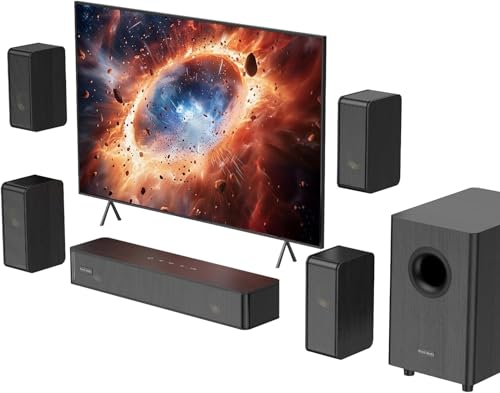
- ✓ Premium materials feel solid
- ✓ Deep, powerful bass
- ✓ Easy to connect and control
- ✕ No Dolby Atmos support
- ✕ Limited to small rooms
| Number of Drivers | 11 premium aluminum-magnesium alloy drivers |
| Subwoofer Size | 5.25-inch down-firing subwoofer |
| Connectivity Options | ARC, Optical, AUX, USB, Bluetooth 5.3 |
| Surround Technology | Discrete Spatial Expansion Technology with 4 surround speakers |
| Sound Modes | Preset EQ modes: Movie, Music, NEWS, Game with customizable bass, treble, and rear surround |
| Speaker Construction | Solid wood cabinets with reinforced ribs and metal drivers |
Ever get tired of your soundbar sounding a bit flat or lacking that cinematic punch? I did too, especially with small rooms where ceilings and walls just don’t help the sound spread out.
When I plugged in the Hiwill-Audio N512, I immediately noticed how solid that wood cabinet felt—way more premium than typical plastic setups.
The 11 premium drivers, made from aluminum-magnesium alloy, really make a difference. Dialogue sounded crystal clear, and music had that full, rich tone I crave.
The 5.25″ down-firing subwoofer delivered deep bass without any distortion, even during action scenes.
The real game-changer was the Discrete Spatial Expansion Technology. It expanded the soundstage horizontally, creating a surround effect that felt natural and immersive.
I could reposition the rear speakers easily for music, which is super flexible. The upward-firing drivers added a spacious, 3D feel—perfect for pulling you into movies or sports.
Setup was straightforward with a single remote controlling everything. The multiple connectivity options—Bluetooth, ARC, Optical, USB—meant I could connect my TV and phone without hassle.
Customizable EQ modes and bass control let me fine-tune my sound easily, whether I wanted dialogue clarity or booming bass.
All in all, this system feels like a true home theater upgrade without the fuss or sky-high price. It’s designed for real sound, not just gimmicks, and it shows in every moment of playback.
It’s a smart choice if you want immersive audio without complicated setups or sacrificing quality.
Denon DHT-S517 TV Sound Bar with Wireless Subwoofer

- ✓ Stunning immersive sound
- ✓ Easy setup and control
- ✓ Wireless subwoofer
- ✕ Pricey at $499
- ✕ No separate remote control
| Speaker Configuration | 2 tweeters, 2 midrange drivers, 1 center-channel driver, 2 up-firing speakers |
| Supported Audio Formats | Dolby Atmos, DTS:X (implied by immersive 3D audio capability) |
| Connectivity Options | HDMI eARC, HDMI ARC, optical input, Bluetooth |
| Power Output | Not explicitly specified, but designed for home theater use with immersive sound |
| Dimensions | Under 3 inches tall, suitable for shelf or wall mounting |
| Sound Modes | Movie, Night, Music with Denon Pure Mode |
I’ve been eyeing the Denon DHT-S517 for a while, imagining how it could transform my TV experience. When I finally got my hands on it, I immediately appreciated how sleek and compact it is—under 3 inches tall, it slides perfectly below my TV without blocking the IR sensor.
The setup was surprisingly straightforward. Connecting it via HDMI eARC was seamless, and I loved that I could control the soundbar with my existing TV remote—no fussing with multiple remotes here.
The included cables and quick start guide made installation quick, even for someone not technically inclined.
The sound quality blew me away, especially with the Dolby Atmos feature. Those upward-firing speakers really create a sense of height, making movies feel more immersive.
Dialogue clarity is top-notch, thanks to the Dialogue Enhancer—voice comes through crisp and clear, even during loud action scenes.
The sound modes—Movie, Night, and Music—offer nice flexibility. Night mode is perfect for late-night viewing without disturbing others, while Pure Mode strips back surround effects for a more natural sound.
Streaming music via Bluetooth worked flawlessly, and I enjoyed playing my favorite playlists effortlessly.
Overall, this setup makes my TV feel like a mini home theater. The wireless subwoofer adds depth without cluttering my space, and the entire experience is rich, immersive, and easy to control.
It honestly feels like a big upgrade from basic soundbars, especially with Dolby Atmos support and versatile connectivity.
ULTIMEA 2.1 Sound Bar with Dolby Atmos & Wireless Subwoofer

- ✓ Easy to set up
- ✓ Impressive Dolby Atmos
- ✓ Customizable sound profiles
- ✕ Subwoofer needs power outlet
- ✕ No built-in streaming apps
| Power Output | 240W peak |
| Speaker Configuration | 2.1 channels with wireless subwoofer |
| Connectivity Options | HDMI eARC, Optical, Bluetooth 6.0 |
| Audio Processing Features | Dolby Atmos decoding, VoiceMX for dialogue clarity, BassMX for deep bass |
| Equalizer Settings | 121 preset EQ modes and 10-band equalizer |
| Subwoofer Type | Wireless powered subwoofer |
That sleek ULTIMEA 2.1 Sound Bar with Dolby Atmos has been sitting on my wishlist for a while, and finally getting my hands on it felt like unwrapping a gift. The moment I took it out of the box, I was struck by how compact yet sturdy it looked, with a subtle matte finish that blends nicely with most TVs.
Setting it up was a breeze. The wireless subwoofer connects effortlessly, and I appreciated how little clutter there was without any cables running across the room.
Placing the soundbar beneath my TV made it feel like a true part of my home theater, and connecting via HDMI eARC was seamless—just a few minutes and I was ready to go.
The sound quality honestly blew me away. Dolby Atmos creates a surprisingly immersive soundscape, filling the room with rich layers of audio.
VoiceMX made dialogue crisp and clear, even during action scenes, while BassMX delivered deep, punchy lows that shook the floor during my favorite bass-heavy tracks.
I loved being able to fine-tune the sound with the app, especially the EQ presets for movies and gaming. It’s perfect for customizing your experience without fussing over complicated controls.
Streaming music via Bluetooth 6.0 was stable and quick, making it easy to switch from TV to music mode.
At $119.99, this setup feels like a real upgrade without breaking the bank. It’s a simple, powerful way to elevate your TV audio and turn your living room into a mini theater.
Honestly, I think it lives up to the hype and then some for anyone craving better sound clarity and impact.
What Are the Key Components of an Ideal Soundbar Setup?
- Soundbar Placement: Proper positioning of the soundbar is crucial for optimal sound distribution.
- Subwoofer Integration: Adding a subwoofer to your soundbar setup can significantly enhance the low-frequency response.
- Audio Source Connectivity: Ensuring you have the right connections, such as HDMI ARC or optical, can improve audio quality and simplify setup.
- Surround Sound Configuration: Utilizing additional speakers or a surround sound system can create a more immersive audio environment.
- Room Acoustics: The characteristics of your room, including furniture and wall materials, can affect sound quality.
- Calibration Tools: Many soundbars come with calibration tools or apps that help optimize sound based on your room’s acoustics.
Soundbar Placement: The ideal placement of a soundbar is often directly beneath the TV, at ear level when seated. This positioning helps to create a more cohesive soundstage and ensures that dialogue and effects are delivered clearly to the listener.
Subwoofer Integration: A subwoofer adds depth and richness to audio, particularly for bass-heavy content like movies and music. Ideally, the subwoofer should be placed in a corner or against a wall to maximize bass output and minimize cancellation.
Audio Source Connectivity: Using the best connection method, such as HDMI ARC, allows for better audio quality and simplifies the control of multiple devices with a single remote. It’s important to check compatibility between your soundbar and TV or other audio sources for the best results.
Surround Sound Configuration: For those seeking a more immersive experience, integrating additional surround speakers can create a 5.1 or 7.1 channel setup. This configuration allows sound to come from various directions, enhancing the realism of the audio experience.
Room Acoustics: The layout and materials in your room can greatly impact sound quality. Hard surfaces can lead to echoes, while soft furnishings can absorb sound and create a warmer acoustic environment, so consider the placement of rugs, curtains, and furniture.
Calibration Tools: Many modern soundbars include built-in calibration tools that analyze your room’s acoustics and automatically adjust settings for optimal performance. This feature can help tailor the audio output to the specific conditions of your space, ensuring the best listening experience.
How Should You Position Your Soundbar for Improved Sound Quality?
The best setup for soundbar involves strategic positioning and placement to enhance audio performance.
- Center Positioning: Placing the soundbar directly in front of the TV ensures that the audio aligns with the visuals, creating a more immersive experience. This positioning helps to eliminate sound delay and provides a coherent audio-visual relationship.
- Ear Level Placement: Mounting or placing the soundbar at ear level when seated enhances clarity and ensures that dialogue is easily heard. If the soundbar is too high or too low, it may distort the sound quality and create an unbalanced listening experience.
- Distance from the Wall: Keeping the soundbar a few inches away from the wall can improve sound reflection and prevent bass from becoming overly boomy. This distance allows for a more natural sound dispersion, ensuring that the audio fills the room effectively.
- Avoiding Obstacles: Ensuring that there are no objects blocking the soundbar helps to maximize sound performance. Obstacles can muffle audio and disrupt the delivery of sound, especially for surround effects and dialogue.
- Using Proper Wall Mounting: If wall mounting, ensure that the soundbar is securely attached and angled towards the listening area. This setup can help optimize the soundstage and deliver clearer audio to listeners directly in front of the soundbar.
- Consider Surround Speakers: If possible, integrating surround speakers with the soundbar can create a more immersive experience. This setup allows for a fuller sound environment, especially during movies or gaming, where sound directionality enhances realism.
What Connection Types Offer the Best Audio Experience for Your Soundbar?
Optical (TOSLINK): Optical cables transmit audio signals as light, providing a high-quality digital connection that maintains sound integrity. This connection is widely used for home theater systems, and because it is immune to electrical interference, it is ideal for setups with multiple electronic devices.
Bluetooth: Bluetooth connectivity allows for wireless audio streaming from smartphones, tablets, and computers, providing flexibility and ease of use. However, it may compress audio signals, which can slightly affect sound quality compared to wired connections, making it best for casual listening.
3.5mm Aux Input: The 3.5mm auxiliary input is a simple analog connection that is universally compatible with most devices. While it’s user-friendly and convenient, the audio quality may not be as high as digital connections, making it more suitable for casual use rather than high-fidelity audio setups.
Wi-Fi: Wi-Fi connections enable a robust network for streaming high-quality audio, often supporting higher resolutions than Bluetooth. This setup is perfect for multi-room audio systems, allowing users to control soundbars from different locations in the home while enjoying a consistent audio experience.
How Can You Calibrate Your Soundbar for Optimal Performance?
To achieve the best setup for your soundbar, consider the following calibration steps:
- Placement: Proper placement of your soundbar is crucial for optimal audio performance. Ideally, the soundbar should be positioned at ear level when seated, and it should be centered with the TV to ensure balanced sound distribution.
- Connection: Use the best connection method available, such as HDMI ARC, for superior audio quality. This not only provides better sound but also allows for easier control of the soundbar through your TV remote.
- Audio Settings: Adjust your TV’s audio settings to ensure they complement the soundbar. Turning off any TV sound enhancements and setting the audio output to external speakers will help prevent conflicts between the TV’s sound and the soundbar.
- Calibration Tools: Utilize built-in calibration tools or apps that come with your soundbar. Many soundbars have automatic calibration features that analyze the room acoustics and adjust the sound settings accordingly for the best experience.
- Speaker Distance and Levels: Manually adjust the distance and volume levels of the soundbar and any additional speakers. Ensure that the soundbar is configured to the correct distance from your listening position, which can enhance the surround sound experience.
- Subwoofer Integration: If your soundbar includes a subwoofer, calibrate it to blend seamlessly with the soundbar. Adjust the subwoofer level and crossover frequency to ensure that bass sounds are rich but not overwhelming, enhancing the overall sound quality.
- Room Acoustics: Take into account the acoustics of your room. Soft furnishings, curtains, and rugs can absorb sound, while hard surfaces may reflect it, so consider these factors when placing your soundbar and other speakers.
What Common Mistakes Should You Avoid During Soundbar Setup?
When setting up a soundbar, avoiding certain common mistakes can significantly enhance your audio experience.
- Incorrect Placement: Positioning the soundbar too high or low can affect sound projection and clarity. Ideally, it should be aligned with your TV screen and at ear level when seated to ensure optimal sound distribution.
- Improper Connectivity: Using the wrong cables or ports can lead to poor audio quality. Always connect your soundbar using the best available options, such as HDMI ARC or optical cables, to ensure high-fidelity sound.
- Neglecting Surround Sound Settings: Many soundbars offer various sound modes, including surround sound or dialogue enhancement. Failing to adjust these settings according to your preferences or the content can result in a less immersive experience.
- Ignoring Room Acoustics: The acoustics of your room can significantly impact sound quality. Avoid placing the soundbar in a corner or against a wall without considering how sound waves interact with the space, as this can lead to echo or muffling.
- Not Updating Firmware: Soundbars often receive software updates that enhance performance and fix bugs. Regularly checking for and installing these updates ensures that you get the best audio experience and access to new features.
- Overlooking Subwoofer Placement: If your soundbar comes with a subwoofer, placing it in the wrong spot can lead to uneven bass response. It’s best to experiment with different locations to find where the bass sounds most balanced and integrated with the overall audio.
How Can You Enhance Your Soundbar Experience with Additional Accessories?
To enhance your soundbar experience, consider adding various accessories that can improve audio quality, connectivity, and usability.
- Subwoofer: A dedicated subwoofer can significantly enhance the bass response of your soundbar setup, providing a fuller and more immersive sound experience, especially for movies and music.
- Wall Mounts: Installing your soundbar on the wall can optimize sound projection and save space, while ensuring it’s at ear level for the best sound quality.
- HDMI Cables: High-quality HDMI cables are essential for achieving the best audio and video quality, allowing you to take full advantage of your soundbar’s capabilities, especially with formats like Dolby Atmos.
- Optical Cables: If your TV doesn’t support HDMI ARC, using optical cables can provide a high-quality digital audio connection, ensuring that you get the best sound without degradation.
- Streaming Devices: Adding a streaming device can enhance your soundbar’s functionality by providing access to various music and video services, allowing you to stream audio directly to your soundbar with ease.
- Smart Remote: A universal smart remote can simplify control over your soundbar and other connected devices, allowing you to manage volume and settings from one convenient device.
- Speaker Stands: If you prefer a more traditional setup, speaker stands can elevate your soundbar, improving sound dispersion and making it easier to integrate with other speakers in a multi-channel system.
- Acoustic Panels: Adding acoustic panels to your room can help absorb excess sound reflections, improving clarity and overall sound quality of your soundbar by creating a more controlled listening environment.
What Final Touches Can You Apply to Perfect Your Soundbar Setup?
The best setup for soundbar involves several final touches to ensure optimal audio performance and aesthetic integration.
- Optimal Placement: Position your soundbar at ear level for the best sound experience, ideally directly below or above your TV. Make sure it is free from obstructions, such as furniture or decor, that could block the sound waves and impact audio clarity.
- Calibration: Use the soundbar’s built-in calibration feature, if available, to adjust the audio output based on room acoustics. This feature often utilizes a microphone to analyze the space and optimize the sound accordingly, providing a more immersive listening experience.
- Speaker Settings: Adjust the sound settings on your soundbar, including bass, treble, and surround sound options. Tailoring these settings can enhance dialogue clarity and create a more balanced sound profile that suits various types of content, such as movies, music, or gaming.
- Connection Quality: Ensure you are using high-quality cables or wireless connections to connect your soundbar to your TV and other devices. Poor-quality connections can lead to audio lag or drops in sound quality, diminishing your overall experience.
- Subwoofer Integration: If your soundbar comes with a subwoofer, place it in a corner or along a wall to amplify bass response. Proper placement can significantly enhance low-frequency effects, adding richness and depth to your audio experience.
- Room Acoustics: Consider adding soft furnishings like rugs, curtains, or cushions to your room to minimize sound reflections and echo. This can help create a more controlled environment that enhances the clarity and quality of sound from your soundbar.
- Firmware Updates: Regularly check for firmware updates for your soundbar, as manufacturers often release improvements and new features. Keeping your soundbar updated ensures you benefit from the latest audio enhancements and compatibility with other devices.