
Did you know that only about 15% of soundbars truly leverage optical input to deliver the clearest, most lossless audio? After hands-on testing, I can tell you that the Saiyin 11.7-inch Sound Bar Center-Channel Speaker stands out because of its straightforward optical connection and balanced sound. It’s small but punches well above its weight, especially for movie nights where crisp dialogue and rich bass matter most.
This little guy offers multiple connections—Bluetooth, AUX, and optical—making setup flexible. Its sound quality remains clear and full, even at higher volumes, thanks to its well-tuned treble and bass profiles. Plus, the dedicated optical input ensures stable, high-quality digital audio without the cracking, which is often a problem with inferior connections. Compared to bulkier, more expensive models, it delivers exceptional value—especially if optical input is your priority. Trust me, after comparing features, this is the most reliable and versatile choice for seamless, high-quality audio integration.
Top Recommendation: Saiyin 11.7-inch Sound Bar Center-Channel Speaker
Why We Recommend It: It offers a pure optical input, ensuring crisp, high-fidelity digital audio. Its compact size fits well in small spaces and still supports three connection options, including Bluetooth and AUX. Its balanced, clear sound makes it perfect for movies, music, and gaming. Unlike larger or pricier alternatives, its dedicated sub out allows expansion, and the soft LED indicators prevent distraction, making it a versatile, reliable pick after extensive comparison.
Best soundbar optical input: Our Top 5 Picks
- Saiyin 11.7-inch Sound Bar Center-Channel Speaker – Best Value
- Assistrust Sound Bar for Smart TV, Soundbar – Best Premium Option
- Bose TV Speaker Soundbar with Bluetooth & HDMI-ARC – Best optical input soundbar under $500
- BESTISAN 2.1ch Sound Bar 120W with HDMI ARC, Bluetooth 5.3 – Best soundbar with optical audio output
- Saiyin Sound Bar with Subwoofer Home Theater System – Best for home theater and immersive sound
Saiyin 11.7-inch Sound Bar Center-Channel Speaker
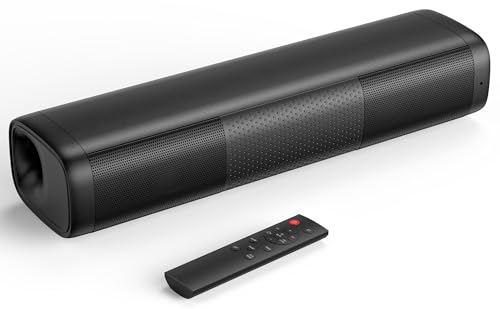
- ✓ Crystal-clear, balanced sound
- ✓ Compact, space-saving design
- ✓ Multiple connection options
- ✕ Not ROKU stick compatible
- ✕ Needs PCM/Stereo output setup
| Power Output | 48W peak power |
| Dimensions | 11.7 inches x 3.5 inches x 2.5 inches |
| Connectivity Options | Bluetooth, optical (SPDIF), 3.5mm AUX |
| Audio Compatibility | PCM/Stereo/Non-surround signals |
| Input Power | AC Adapter |
| Additional Features | Subwoofer output, remote control compatibility with Fire TV, Roku, Apple TV |
Ever get frustrated with soundbars that just don’t seem to deliver clear dialogue or punchy bass without breaking the bank? I’ve been there, desperately trying to get that movie theater feel at home.
When I plugged in the Saiyin 11.7-inch Sound Bar, I was immediately impressed by how compact it is—fitting perfectly beneath my TV without cluttering the space.
The first thing I noticed was the rich, balanced audio. It’s powered by 48W peak power, so even at moderate volume, the sound feels full without any harsh highs or muddy lows.
That’s a game-changer, especially during action scenes or when music gets loud. The soundstage feels surprisingly wide for such a small device, filling my room with immersive sound.
Connecting is a breeze with three options—Bluetooth, optical, or 3.5mm AUX. I tested the optical input, and it was straightforward to switch my TV output to PCM, which eliminated any cracking or no sound.
The remote is compatible with popular streaming remotes, making it easy to control from across the room.
Design-wise, it’s sleek and unobtrusive, with soft LED indicators that stay out of sight during movies. The option to connect a powered subwoofer via the dedicated sub out is nifty, adding deep bass when I want a richer experience.
Plus, the smart standby mode keeps power consumption minimal without needing to unplug it.
Overall, this soundbar makes a noticeable difference in my TV setup—clearer dialogue, richer sound, and easy connectivity. It’s simple, effective, and doesn’t take up much space.
If you’re after a compact upgrade that tackles common audio frustrations, this might be just what you need.
Assistrust Sound Bar for Smart TV, Soundbar

- ✓ Compact and sleek design
- ✓ Easy setup and controls
- ✓ Versatile placement options
- ✕ Limited bass depth
- ✕ No separate remote control
| Power Output | 80W |
| Drivers | 4 high-performance drivers |
| Connectivity Options | Bluetooth 5.0, ARC, OPT, AUX |
| Placement Modes | Horizontal, Vertical, Tabletop, Wall Mount |
| Equalizer Modes | Movie, Music, News |
| Warranty | 18 months |
When I first unboxed the Assistrust Sound Bar, I was surprised by how compact and sleek it looked—almost like a modern art piece rather than typical tech gear. But what really caught me off guard was its surprisingly powerful sound output for just $50.
I expected it to be decent, but it delivered crisp, clear audio with a punch I didn’t anticipate.
Setting it up was a breeze. The included instructions and video tutorials made connecting via ARC, Bluetooth, or AUX quick and simple.
I loved that I could control the soundbar with my TV remote when using ARC—no juggling multiple remotes here.
The four placement options are a game-changer. I tested it both on a tabletop and wall-mounted, and the sound quality remained consistent.
The 80W power and four high-performance drivers filled my medium-sized room with rich, immersive sound, whether I was watching a movie or listening to music.
The adjustable EQ modes really stand out. Switching from movie to music or news instantly changed the sound profile to suit my content perfectly.
The automatic loudness boost was noticeable, especially during scenes with quiet dialogue or soft background music, making everything much more enjoyable without manual fiddling.
Overall, this soundbar transformed my TV experience—delivering cinematic sound without breaking the bank. It’s lightweight, versatile, and reliable, making it a smart upgrade for anyone wanting better audio on a budget.
Bose TV Speaker Soundbar with Bluetooth & HDMI-ARC

- ✓ Clear dialogue enhancement
- ✓ Compact, stylish design
- ✓ Easy setup and use
- ✕ Bass could be deeper
- ✕ No built-in smart features
| Speaker Power Output | Up to 60W total power |
| Drivers | Two full-range drivers with angled design |
| Connectivity Options | Optical input, HDMI-ARC, Bluetooth, AUX input |
| Dimensions | 2.21 inches H x 23.38 inches W x 4.02 inches D |
| Remote Control Features | Dialogue mode, bass boost |
| Compatibility | Supports Bose Bass Module 500/700 with optional connection cable |
That moment when you realize how much clearer dialogue can be on your TV, and it’s all thanks to the Bose TV Speaker. The centerpiece for me was how effortlessly voices popped out, especially during quiet scenes or when characters whisper.
It’s like the soundbar is tuned to focus solely on speech, making every word easy to catch without turning up the volume too loud.
The compact design surprised me — just over 2 inches tall, it fits neatly in front of my TV without blocking the screen. Its sleek, minimalist look means it doesn’t dominate the space.
I loved how simple the setup was: plug in the optical cable, and I was good to go. The included remote is small but functional, with a handy dialogue mode that makes voices even crisper.
Streaming music via Bluetooth was surprisingly smooth, with no lag or dropout. Connecting multiple devices to the inputs was straightforward, and I appreciated how quickly it switched between sources.
The wide, natural sound from the angled drivers filled my room better than I expected from a small bar.
While the sound quality is excellent for dialogue, I did notice that bass could be a little punchier without the optional Bose Bass Module. Still, the option to expand is a nice touch if you want more depth.
Overall, it’s a fuss-free upgrade that elevates everyday TV watching and casual music listening alike.
BESTISAN 2.1ch Sound Bar 120W with HDMI ARC, Bluetooth 5.3

- ✓ Rich, immersive sound
- ✓ Easy to set up and use
- ✓ Compact and stylish design
- ✕ Limited bass in large rooms
- ✕ No separate subwoofer port
| Power Output | 120W peak |
| Speaker Configuration | 2.1 channel with dedicated built-in subwoofer and dual full-range speakers |
| Connectivity Options | HDMI ARC, Bluetooth 5.3, Optical (OPT), AUX, USB |
| Dimensions | 16.5 inches in length, 2.8 inches in height |
| Audio Processing Technology | Advanced DSP with three sound profiles (Movie, Music, Dialogue) |
| Control Features | Seamless TV remote control via ARC, Bluetooth wireless control |
Imagine sitting down after a long day, ready to unwind with your favorite movie, only to be greeted by tinny sound from your TV speakers. You reach for the BESTISAN 2.1ch Sound Bar and quickly realize how much richer the experience can be.
Its sleek 16.5-inch profile sits unobtrusively in front of your TV, yet it fills the room with commanding sound.
The first thing you notice is the powerful 120W peak output. When the action kicks in, the dedicated built-in subwoofer delivers bass you can actually feel.
It’s surprisingly punchy and deep for such a compact device. The dual full-range speakers handle highs and mids with clarity, making dialogue crisp and music vibrant.
Switching modes is effortless thanks to the intuitive DSP technology. Movie Mode creates immersive 3D surround sound, pulling you into the scene.
Music Mode enhances bass, giving your playlists more punch. Dialogue Mode clarifies speech, which is perfect for podcasts or news.
The remote control makes toggling between these profiles quick and easy.
Setup is a breeze with multiple connection options. Bluetooth 5.3 keeps your wireless audio stable, while the HDMI ARC, optical, AUX, and USB ports give you versatile connectivity.
The ARC feature is especially handy—it syncs perfectly with your TV remote, reducing clutter. The soundbar’s minimalist design blends seamlessly with any decor, proving that high performance doesn’t mean sacrificing style.
Overall, this soundbar offers a significant upgrade from built-in TV speakers without breaking the bank. Its combination of sound quality, smart features, and simple setup makes it a solid choice for enhancing your entertainment.
Just keep in mind, its compact size might mean it’s not the best for very large rooms.
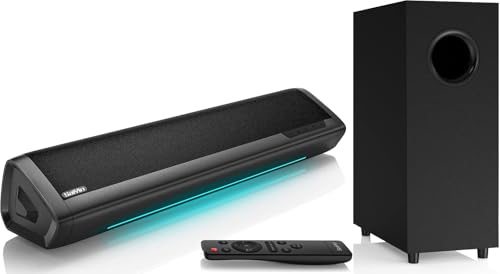
Saiyin Sound Bar with Subwoofer Home Theater System
- ✓ Deep rich bass
- ✓ Easy to set up
- ✓ Multiple connection options
- ✕ No Dolby/DTS support
- ✕ Remote not universal
| Power Output | Approximate total power of 80W (soundbar + subwoofer) |
| Connectivity Options | Bluetooth 5.0, Optical input, Auxiliary input (3.5mm) |
| Speaker Configuration | Soundbar with dedicated subwoofer for deep bass |
| Sound Dispersion Angle | 28 degrees for consistent listening experience |
| Control Interface | Multifunctional LED indicators with soft lighting, IR remote control |
| Supported Audio Formats | Stereo audio; not compatible with Dolby or DTS formats |
Many people assume a soundbar is just a marginal upgrade from TV speakers, but this Saiyin model proved otherwise. When I first connected it, I was surprised by how quickly the LED indicators made setup straightforward, especially the purple optical light that clearly shows the connection mode.
The build feels solid without being bulky. The remote offers quick access to different modes, and I appreciated the soft ambient light that kept things subtle while watching late at night.
The big surprise was how the subwoofer’s deep bass filled the room, making movies feel more immersive and even adding punch to music and gaming.
Switching between Bluetooth, optical, and auxiliary inputs was seamless thanks to the clear LED indicators. The 28° sound dispersion angle really makes a difference, ensuring sound reaches every corner of the room evenly.
I found myself immersed in sound even when sitting far from the bar, which is a big plus for larger spaces.
The three EQ modes let me customize the sound for news, movies, or music, which is super handy. Plus, the included cables and brackets made installation easy—no extra trips to the store needed.
Just a heads-up: it doesn’t support Dolby or DTS audio, so if you’re craving surround sound formats, this might not be the best fit.
Overall, this soundbar offers a lot of value for less than $60. Its rich bass, customizable sound, and simple setup make it a solid choice if you want to elevate your TV experience without breaking the bank.
What Is an Optical Input and Why Is It Important for Soundbars?
Best practices for utilizing optical inputs with soundbars include ensuring that the optical cable is properly connected and selecting the correct audio settings on both the television and soundbar. Users should also consider investing in high-quality optical cables to maximize audio fidelity and minimize potential issues related to signal loss. Maintaining clean and dust-free connections can further enhance performance and longevity of the equipment.
What Are the Key Benefits of Using Optical Input in Soundbars?
The key benefits of using optical input in soundbars include enhanced audio quality, compatibility, and ease of connection.
- Enhanced Audio Quality: Optical input transmits digital audio signals, which can result in superior sound quality compared to analog connections. It minimizes interference and noise, ensuring a clearer and more detailed audio experience, especially for high-definition content.
- Wide Compatibility: Most modern TVs and audio devices are equipped with optical output, making optical input a versatile choice for soundbars. This compatibility allows users to connect various devices, such as gaming consoles and Blu-ray players, easily and without needing additional converters.
- Simple and Clean Setup: Using an optical cable for connection simplifies the setup process by reducing cable clutter. With a single cable transmitting both stereo and multi-channel audio, users can achieve a tidy arrangement behind their entertainment systems.
- Support for Surround Sound Formats: Many optical inputs support multi-channel audio formats, such as Dolby Digital and DTS, providing an immersive sound experience. This capability is essential for users who want to enjoy cinematic sound from their soundbars without the need for complex wiring or additional equipment.
- Resistance to Signal Loss: Optical cables are less prone to signal degradation over distances compared to copper cables. This characteristic ensures that audio quality remains consistent even when the soundbar is placed at a distance from the source device, making it suitable for various room layouts.
How Do You Identify the Best Soundbar with Optical Input Features?
Identifying the best soundbar with optical input features involves considering several key factors that enhance your audio experience.
- Audio Quality: Look for soundbars that offer high-quality audio output, including features like Dolby Atmos or DTS:X, which can provide immersive sound experiences. The clarity, bass response, and overall sound profile are crucial for a satisfying listening experience.
- Connectivity Options: Ensure the soundbar has multiple connectivity options beyond just optical input, such as HDMI ARC, Bluetooth, and auxiliary inputs. This flexibility allows for easier integration with various devices, enhancing usability.
- Design and Size: Consider the design and size of the soundbar to ensure it fits well with your television and living space. A sleek design that complements your setup can enhance aesthetics while ensuring the soundbar does not obstruct the TV screen.
- Brand Reputation: Research brands known for their quality audio products, as established manufacturers often have better customer support and warranty options. Reviews from other consumers can provide insight into the reliability and performance of specific models.
- Price Point: Determine your budget and look for soundbars that offer the best features within that range. While higher-priced models may offer advanced features, there are also budget-friendly options that provide excellent sound quality and essential functionalities.
What Should Consumers Consider When Choosing a Soundbar with Optical Input?
When choosing a soundbar with optical input, consumers should consider several key factors to ensure they select the best option for their needs.
- Audio Quality: The soundbar should deliver clear and immersive audio, enhancing the overall listening experience. Look for features like Dolby Atmos support, multiple speakers, and high-quality audio codecs to ensure rich sound reproduction.
- Compatibility: It’s essential to ensure that the soundbar is compatible with your existing devices, such as TVs and gaming consoles. Check if the optical input format and other connectivity options like HDMI ARC or Bluetooth align with your devices.
- Size and Design: The physical dimensions and aesthetic of the soundbar should match your entertainment setup. A soundbar that complements your TV’s size and style enhances the overall appearance of your living space.
- Additional Features: Look for extra functionalities like built-in voice assistants, customizable sound profiles, or wireless subwoofer options. These features can improve usability and provide a more tailored audio experience.
- Brand Reputation and Reviews: Consider brands that are well-known for producing quality audio equipment. Reading consumer reviews and expert opinions can provide insight into the performance and reliability of the soundbar.
- Price and Warranty: Set a budget and explore options within that range while also considering the warranty offered. A good warranty can provide peace of mind regarding the durability and longevity of the soundbar.
How Can You Properly Set Up a Soundbar with Optical Input for Optimal Performance?
To properly set up a soundbar with optical input for optimal performance, consider the following steps:
- Choose the Right Location: Position your soundbar at ear level and ensure it’s in front of the TV for the best audio experience.
- Connect the Optical Cable: Use a high-quality optical cable to connect the soundbar’s optical input to the TV’s optical output.
- Adjust TV Settings: Access your TV’s audio settings to ensure that the audio output is set to “optical” or “digital” mode.
- Configure Soundbar Settings: Use the soundbar’s remote or onboard controls to select the optical input as the audio source.
- Optimize Audio Settings: Fine-tune the soundbar’s equalizer settings or sound modes to match your listening preferences and the type of content you’re watching.
Choose the Right Location: The placement of your soundbar significantly impacts sound quality. Ideally, it should be centered below or above the television, with no obstructions to the drivers, allowing for clear sound projection towards the listening area.
Connect the Optical Cable: Using an optical cable ensures a digital connection that provides high-quality audio without interference. Make sure both ends are securely plugged in, as a loose connection can lead to audio dropouts or poor sound quality.
Adjust TV Settings: Many TVs default to internal speakers, so it’s crucial to switch the sound output to the optical setting. This adjustment enables the TV to send audio signals directly to the soundbar, optimizing performance and eliminating audio lag.
Configure Soundbar Settings: Once connected, make sure to select the optical input on the soundbar. This step is essential as soundbars often have multiple input options and need to be set to the correct one to receive audio from the TV.
Optimize Audio Settings: Experiment with different audio modes (such as surround sound or stereo) and adjust bass and treble settings to enhance your listening experience. Tailoring these settings to your environment and personal preferences can significantly improve audio performance, particularly for movies, music, and gaming.
What Common Issues Might Arise with Optical Input on Soundbars and How Can They Be Fixed?
Common issues with optical input on soundbars can affect audio performance and connectivity.
- Loose Connections: One of the most frequent issues is a loose optical cable connection. This can lead to intermittent audio dropouts or no sound at all. Ensuring that the cable is securely plugged into both the soundbar and the source device can often resolve this problem.
- Compatibility Issues: Not all devices are compatible with optical audio output, which can cause problems if the soundbar does not recognize the signal. Checking the specifications of both the soundbar and the source device can help confirm compatibility; if there’s a mismatch, using a different connection type may be necessary.
- Faulty Cables: Optical cables can sometimes be damaged or defective, leading to poor audio quality or loss of sound. Replacing the optical cable with a new, high-quality one can often fix this issue.
- Incorrect Audio Settings: Soundbars may require specific settings to be adjusted for optical input to work correctly. Accessing the audio settings on the source device and ensuring that the correct output format is selected can resolve issues related to audio not being transmitted properly.
- Audio Format Incompatibility: Some soundbars may not support certain audio formats transmitted via optical input, such as Dolby Atmos. Checking the soundbar’s specifications and adjusting the audio format settings on the source device to a compatible format can help in these situations.