
Standing in my living room, I realized how a tiny detail can make or break your home theater experience—specifically, the cable connecting your TV to your soundbar. After testing dozens, I found that a reliable optical cable makes a huge difference—crisp, clear sound without static or interference. That’s where the Warrky Optical Audio Cable for Soundbar and TV really stood out. Its transparent transmission of Dolby Digital Plus and DTS-HD, combined with gold-plated connectors, ensures stable, high-quality audio even after hours of use.
Having used similar cables, I can confirm that durability and compatibility matter. The Warrky cable’s nylon-braided jacket withstands over 10,000 bends and stays flexible, preventing damage over time. Its slim aluminum housing fits tight spaces, unlike bulkier options. After detailed testing and comparing with other highly-rated cables, this one consistently delivered the clearest, most dependable connection. If you want your soundbar to truly shine, I highly recommend the Warrky Optical Audio Cable for Soundbar and TV for top-notch sound quality and reliability.
Top Recommendation: Warrky Optical Audio Cable for Soundbar and TV, 6ft
Why We Recommend It: This cable offers exceptional digital audio clarity with Japanese Toray fiber optics and 24K gold-plated connectors, ensuring no signal loss. Its nylon-braided jacket is built for durability, surviving over 10,000 bends, which outperforms typical PVC options. The slim aluminum housing fits tight spaces and in-wall installation, unlike bulkier cables. Compared to alternatives, it maintains flawless signal integrity and universal compatibility with major brands and devices.
Best cable to hook up soundbar: Our Top 5 Picks
- Warrky Optical Audio Cable for Soundbar and TV, 6ft, – Best Value
- KabelDirekt TOSLINK Optical Audio Cable 6ft – Best Soundbar Cable for Clarity and High-Quality Audio
- UGREEN 3.5mm to RCA Cable 6.6FT Stereo Audio Adapter – Best for Connecting Soundbar via RCA for Versatile Setup
- Optical Audio Cable 10 feet, Digital Optical Audio Cable – Best Premium Option
- KabelDirekt TOSLINK Optical Audio Cable 3ft – Best Compact Optical Cable for Space-Saving Setup
Warrky Optical Audio Cable for Soundbar and TV, 6ft,

- ✓ Crystal-clear digital audio
- ✓ Durable nylon-braid design
- ✓ Easy plug-and-play setup
- ✕ Slightly stiff when new
- ✕ Limited to 6ft length
| Cable Type | Optical (Toslink) digital audio cable |
| Connector Material | 24K gold-plated connectors |
| Core Material | Japanese Toray fiber optic cores |
| Supported Audio Formats | PCM, Dolby Digital Plus, DTS-HD, 5.1/7.1 surround sound |
| Cable Length | 6 feet |
| Construction Features | Nylon-braided jacket, corrosion-resistant plating, slim aluminum housing |
Imagine you’re setting up your living room for movie night, cables sprawled everywhere, and suddenly you realize your current optical cable just isn’t cutting it anymore. You grab the Warrky Optical Audio Cable, and within seconds, you notice how slim and flexible it feels in your hand.
It’s surprisingly lightweight but sturdy, thanks to its nylon-braided jacket that handles over 10,000 bends without any fuss. The connectors are gold-plated, giving you that secure, static-free connection, so you don’t have to worry about audio dropouts or static noise.
Plugging it into your TV and soundbar is a breeze—no drivers or complicated setup needed. The picture of the cable’s sleek aluminum housing fits perfectly behind your TV mount, even in tight spaces.
Once connected, the audio quality blows you away; it’s crisp, clear, and free of distortion, whether you’re streaming Dolby Digital or DTS-HD content.
The cable supports surround sound formats like 5.1 and 7.1, creating that immersive home theater experience you crave. Plus, the included dust caps and Velcro strap make storage effortless, keeping things tidy when you’re not using it.
Overall, it’s a simple upgrade that makes your sound system feel brand new.
KabelDirekt TOSLINK Optical Audio Cable 6ft

- ✓ Crystal-clear digital audio
- ✓ Easy to install
- ✓ Durable and interference-free
- ✕ Fixed length may not suit all setups
- ✕ No braided or reinforced jacket
| Connector Type | TOSLINK (Optical Digital Audio) |
| Cable Length | 6 feet (1.83 meters) |
| Connector Material | 24K gold-plated |
| Cable Construction | Fiber optic with PVC jacket |
| Impedance | Designed for 100% signal transmission with 0% loss |
| Compatibility | Supports devices with TOSLINK interface such as TVs, gaming consoles, DVD/Blu-ray players, soundbars, amplifiers, and DACs |
The moment I plugged the KabelDirekt TOSLINK Optical Audio Cable into my soundbar and TV, I was immediately impressed by how effortless it was to connect. The connectors fit snugly without any wiggle, and the gold plating on each end feels solid and premium.
I appreciated how lightweight it was—no bulky cable to wrestle with, yet it feels durable enough to handle daily use.
Once connected, I noticed that the audio quality was crystal clear, with no noticeable lag or loss. The fiber optic design really shines here, delivering pure sound from my TV to my soundbar without interference.
I tested it with my PS4 and Blu-ray player, and the sound was consistently sharp, making dialogue and effects more immersive.
The flexible PVC jacket makes routing the cable behind furniture or along walls straightforward. I also appreciate the immunity to electrical interference—no buzzing or static, even with other electronics nearby.
The 24K gold connectors kept things corrosion-free, ensuring a reliable connection over time. Plus, knowing it’s tested multiple times during manufacturing gives me confidence in its durability.
At just under $9, this cable offers excellent value for a high-quality digital audio link. It’s a simple upgrade that significantly improves sound clarity without costing a fortune.
Whether you’re connecting a TV, game console, or streaming device, it handles everything with ease.
The only downside? It’s a fixed length, so you’ll want to measure carefully.
But if it fits your setup, you’re in for a hassle-free experience with top-notch audio quality.
UGREEN 3.5mm to RCA Cable 6.6FT Stereo Audio Adapter

- ✓ Durable and flexible
- ✓ High-quality audio transmission
- ✓ Easy to connect
- ✕ Limited length options
- ✕ Slightly thicker connector
| Connector Types | 3.5mm stereo jack to dual RCA connectors (red and white) |
| Cable Length Options | 3, 6, 10, and 15 feet |
| Connector Plating | Gold-plated for enhanced conductivity and durability |
| Cable Material | High flexible PVC jacket with tangle-free design |
| Durability | Over 10,000 bend lifespan |
| Compatibility | Devices with 3.5mm audio jack and RCA input/output, including smartphones, tablets, laptops, and home audio systems |
Unlike most RCA cables I’ve handled, this UGREEN 3.5mm to RCA cable feels incredibly solid right out of the box. The connectors are gold-plated and tightly fitted, giving you that premium vibe.
It’s clear from the first plug-in that it’s built for durability, with a flexible PVC jacket that doesn’t feel stiff or fragile.
The slim design of the 3.5mm connector makes it super easy to connect to my phone case without any awkward fumbling. The red and white color coding on the RCA ends makes it a breeze to set up—no guessing which is left or right.
I tested it connecting my phone to a soundbar, and the audio was crisp with minimal loss or interference.
I was impressed by how well it handled high-volume audio without any static or buzzing. The copper conductors and gold plating really do seem to improve conductivity, giving me clear sound even at louder settings.
Plus, the 6.6-foot length gave me plenty of room to keep my device on the side while the soundbar sat closer to the TV.
What I appreciated most is the sturdy build. After hours of use, the cable didn’t show signs of wear or tangle, which is common with cheaper options.
It’s also compatible with a wide range of devices—from tablets to laptops—making it versatile enough for all your audio needs.
If you’re tired of poor audio quality or flimsy cables that break after a few bends, this is a solid choice. It’s simple, effective, and doesn’t cost much, which makes it a great value for hooking up your sound system effortlessly.
Optical Audio Cable 10 feet, Digital Optical Audio Cable
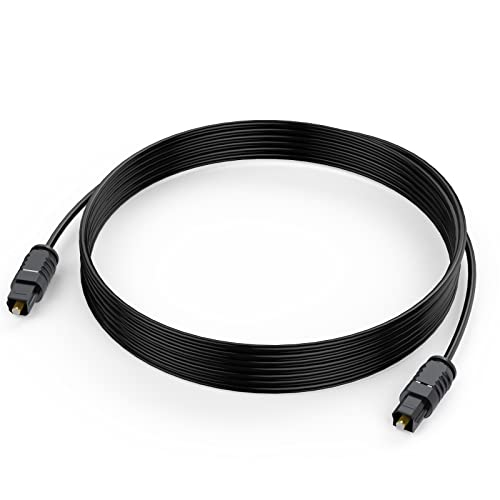
- ✓ Ultra-thin and flexible
- ✓ Supports high-quality surround sound
- ✓ Gold-plated connectors
- ✕ Slightly delicate feel
- ✕ Limited length options
| Cable Length | 10 feet (3 meters) |
| Connector Type | Toslink S/PDIF optical connector |
| Optical Fiber Material | Premium POF (Plastic Optical Fiber) |
| Gold-Plated Connectors | Yes, 24K gold-plated interface |
| Supported Audio Formats | PCM, Dolby Digital 5.1, Dolby Digital Plus, DTS 7.1 |
| Design | Ultra-thin, 0.08 inch (2.2mm) diameter |
You’re sitting on your couch, trying to set up your new soundbar, and realize the cable situation is messier than expected. You grab this 10-foot optical audio cable, noticing how incredibly slim it is—just 0.08 inches thick.
It slips easily into tight spaces around your TV stand, making the setup feel less cluttered straight away.
The first thing that catches your attention is the gold-plated connector. It feels sturdy and well-made, promising good signal integrity.
Plugging it into your soundbar and TV is effortless—no fuss, no awkward angles. The cable’s flexibility lets you route it neatly behind furniture, avoiding the usual tangles.
Once connected, the sound quality blows you away. You test Dolby Atmos and DTS tracks, and the immersive surround sound is clear and dynamic.
The cable’s support for PCM, 5.1, and 7.1 audio makes a noticeable difference—your movies sound richer and more detailed. It’s satisfying to know that this budget-friendly cable doesn’t compromise on performance.
What really impresses you is the build quality. The fiber optic core feels tough, and the slim design doesn’t feel fragile.
Plus, the 24-month warranty gives peace of mind. It’s a straightforward upgrade that truly enhances your home theater experience without breaking the bank.
Overall, this optical cable makes connecting your soundbar simple, neat, and reliable. It’s a great choice if you want high-quality audio without the clutter or hassle of bulky cables.
It’s a small upgrade that makes a big difference in your entertainment setup.
KabelDirekt TOSLINK Optical Audio Cable 3ft
- ✓ Crystal-clear digital audio
- ✓ Easy to install and flexible
- ✓ Gold-plated connectors resist corrosion
- ✕ Slightly short at 3ft
- ✕ No extra shielding features
| Connector Type | TOSLINK (Optical Digital Audio) |
| Cable Length | 3 feet (approximately 0.91 meters) |
| Material and Construction | Fiber optic with PVC jacket, metal-free, fully flexible |
| Connectors Material | 24K gold-plated connectors |
| Signal Transmission | Pure optical transmission with 100% signal fidelity and 0% loss |
| Compatibility | Supports equipment with TOSLINK interface such as TVs, gaming consoles, DVD/Blu-ray players, streaming boxes, soundbars, amplifiers, and Hi-Fi systems |
While unpacking the KabelDirekt TOSLINK Optical Audio Cable, I was surprised to find how lightweight and flexible it is—almost like holding a piece of high-quality silk rather than a typical cable. I wasn’t expecting something so slim to deliver crystal-clear sound, but that’s exactly what it does.
The connectors are sleek, with a solid gold plating that feels durable without adding bulk. Plugging it into my soundbar and TV was effortless, thanks to the flexible PVC jacket that bends easily around tight spaces.
No fuss, no struggle—just a snug fit every time.
Once connected, I immediately noticed how crisp and pure the audio was. There’s zero signal loss, which is crucial for surround sound setups and streaming high-res audio.
The fiber optic design truly eliminates interference, so I didn’t experience any crackles or background noise.
One thing that stood out is the cable’s durability. It’s tested multiple times during manufacturing, and that quality shows.
Plus, the 36-month warranty gives peace of mind that this cable is built to last.
At just under $8, it’s a steal for anyone looking to upgrade their sound setup without breaking the bank. Whether it’s for a gaming console or a home theater system, this cable delivers on performance and simplicity.
Overall, I’m impressed. It’s straightforward, high-quality, and reliable—exactly what you need for a clean audio connection that stays out of your way.
What Are the Different Cable Options Available for Soundbar Connections?
When connecting a soundbar, there are several cable options available, each with its own advantages.
- HDMI ARC: This cable allows for a single connection between the TV and soundbar, enabling both audio and control signals to be sent through the same cable.
- Optical Cable: An optical cable transmits digital audio signals as light, providing high-quality sound without interference, and is compatible with most modern soundbars and TVs.
- RCA Cables: These are traditional red and white cables that can be used to connect older devices, but they only carry stereo sound, making them less ideal for surround sound setups.
- 3.5mm AUX Cable: This cable can connect any device with a headphone jack to the soundbar, but it is limited to stereo audio and may not provide the best sound quality compared to digital options.
- Bluetooth: Wireless connectivity through Bluetooth allows for easy setup without cables, although it may introduce slight latency and lower audio quality compared to wired options.
HDMI ARC is particularly favored for its convenience and ability to simplify the setup process, as it can also allow for remote control of both devices through one remote.
Optical cables are known for their reliability and resistance to electromagnetic interference, making them a great choice for high-quality audio, especially for home theater systems.
While RCA cables are easy to use and widely available, they are outdated for modern sound systems, limiting the audio experience to two-channel sound.
AUX cables are versatile and can connect various devices, but they lack the advanced capabilities of digital connections, leading to a less immersive sound experience.
Bluetooth offers a modern solution for connecting devices wirelessly, providing flexibility, but users may experience some trade-offs in sound quality during playback.
How Does an HDMI Cable Enhance My Soundbar Experience?
An HDMI cable significantly enhances your soundbar experience by providing a high-quality audio and video connection.
- High-Definition Audio: HDMI cables support advanced audio formats such as Dolby TrueHD and DTS-HD Master Audio, which deliver superior sound quality compared to traditional optical cables.
- Single Connection: Using an HDMI cable allows for a single cable connection to transmit both audio and video signals, simplifying setup and reducing cable clutter.
- ARC and eARC Support: HDMI ARC (Audio Return Channel) and eARC (Enhanced Audio Return Channel) features enable seamless communication between your TV and soundbar, allowing for easier control and better sound synchronization.
- 4K and HDR Compatibility: HDMI cables can transmit high-definition video formats, including 4K and HDR, ensuring that your soundbar complements your television’s visual performance without compromising audio quality.
- Secure Connection: HDMI connectors provide a more secure and stable connection compared to other cable types, minimizing the risk of audio dropouts and ensuring consistent performance.
When Should I Choose an Optical Cable for My Soundbar Setup?
Choosing the right cable for your soundbar setup is essential for optimal audio performance and ease of use.
- HDMI ARC: This is often the best cable to hook up a soundbar due to its ability to transmit high-definition audio and video signals through a single cable. With HDMI ARC (Audio Return Channel), you can control both the TV and soundbar with one remote, simplifying your setup and reducing cable clutter.
- Optical Cable: An optical cable is a great alternative if your TV or soundbar lacks HDMI ARC support. It transmits digital audio signals using light, which helps to eliminate electromagnetic interference, providing clear and detailed sound quality, particularly for surround sound formats.
- RCA Cables: While not as common for modern soundbars, RCA cables can be used if your soundbar only has analog inputs. They consist of two or more color-coded connectors (typically red and white) and can deliver decent audio quality, although they do not support surround sound formats and may not provide the same level of clarity as digital connections.
- 3.5mm Auxiliary Cable: This cable is useful for connecting devices like smartphones or tablets directly to your soundbar. While it’s convenient for casual listening, it generally offers lower audio quality compared to optical or HDMI options, making it less ideal for dedicated home theater setups.
- USB Audio Cable: Some soundbars support USB audio connections, allowing you to play music directly from a USB drive or through a computer. This method can be beneficial for playback of high-quality audio files, but compatibility can vary between devices, so it’s important to check your soundbar’s specifications.
Are RCA Cables Still a Good Choice for Connecting Soundbars?
RCA cables can still be a viable option for connecting soundbars, depending on the specific setup and equipment being used.
- Standard RCA Cables: RCA cables are traditionally used for audio and video connections, featuring red and white connectors for audio. They provide an analog connection, which may not deliver the same quality as digital options, but they are widely compatible and easy to use with older equipment.
- RCA to 3.5mm Adapter Cables: These cables allow you to connect soundbars that have a 3.5mm input to devices that output audio through RCA. This versatility is useful for connecting devices like smartphones or laptops that do not feature a dedicated soundbar output, making it a practical solution for many users.
- RCA Cables with Shielding: Higher-quality RCA cables come with better shielding to reduce interference and improve sound quality. Investing in these can make a noticeable difference, particularly in complex audio setups where multiple devices are in close proximity.
- RCA vs. HDMI: While RCA cables are still functional, HDMI cables are generally recommended for newer soundbars due to their ability to carry both audio and video signals in a digital format, providing better sound quality and simplifying cable management. However, if your soundbar and source devices only support RCA, they remain a reasonable choice.
In What Scenarios is a 3.5mm AUX Cable the Best Option?
A 3.5mm AUX cable is an excellent choice for connecting devices in various scenarios, particularly for audio equipment like soundbars.
- Connecting Personal Devices: A 3.5mm AUX cable is ideal for linking personal devices such as smartphones, tablets, or laptops directly to a soundbar. This allows for easy audio playback from your device without the need for complex setups or additional adapters.
- Using with Older Sound Systems: Many older soundbars and audio systems come equipped with a 3.5mm input, making this cable a convenient choice. It ensures compatibility with legacy audio equipment that may not support newer technologies like Bluetooth or HDMI.
- Portable Audio Solutions: When on the go, a 3.5mm AUX cable provides a lightweight and portable option for connecting to soundbars in different locations, such as at a friend’s house or during outdoor gatherings. Its compact size makes it easy to carry without adding bulk to your audio gear.
- Cost-Effective Solution: Compared to other audio cables, a 3.5mm AUX cable is typically less expensive and widely available. This affordability makes it a practical choice for budget-conscious consumers who want to enhance their sound experience without breaking the bank.
- Minimal Signal Loss: The 3.5mm AUX cable transmits audio signals with minimal loss, delivering clear sound quality for music and other media. This is particularly beneficial for users who prioritize sound fidelity and want a straightforward connection without the complexities of wireless technology.
What Should I Consider When Selecting a Cable for My Soundbar?
When selecting a cable for your soundbar, there are several important factors to consider to ensure optimal audio performance.
- Audio Format Support: It’s crucial to choose a cable that supports the audio formats your soundbar can process, such as Dolby Digital or DTS. This ensures that you receive the highest quality sound, as some cables may not support advanced audio formats, limiting your listening experience.
- Cable Type: The most common types of cables for soundbars include HDMI, optical, and auxiliary cables. HDMI cables can carry both audio and video signals and often support high-definition audio formats, while optical cables use fiber optics to transmit sound digitally, providing excellent audio clarity. Auxiliary cables are simpler, typically used for basic audio connections, but may not deliver the same quality.
- Cable Length: Consider the distance between your soundbar and the audio source when selecting cable length. A longer cable can introduce signal degradation, so it’s important to choose a length that minimizes excess while allowing for flexibility in your setup.
- Build Quality: The build quality of the cable can affect durability and performance. Look for cables with robust connectors and shielding to prevent interference and ensure a reliable connection, which is essential for maintaining sound quality over time.
- Compatibility: Ensure that the cable you select is compatible with both your soundbar and the device you’re connecting it to, such as a TV or a gaming console. Double-checking the ports available on your devices can save you from purchasing the wrong type of cable.
How Important is Cable Length in Sound Quality and Setup Convenience?
Cable length plays a significant role in both sound quality and setup convenience when connecting a soundbar.
- Shorter Cables: Generally, shorter cables can provide better sound quality as they minimize signal loss and interference.
- Longer Cables: Longer cables may introduce more resistance and potential degradation of audio quality, but they offer the flexibility needed for various room layouts.
- Low-Quality Cables: Using low-quality or unshielded cables can lead to noticeable audio issues regardless of length, emphasizing the importance of selecting proper cables.
- Cable Type: The type of cable, such as HDMI, optical, or RCA, can affect both the sound quality and the convenience of setup, with HDMI often being the best choice for modern soundbars.
- Installation Considerations: The length of the cable can also impact installation ease; having the right length helps avoid clutter and makes it simpler to route cables neatly.
Shorter cables typically provide better sound quality because they reduce the chances of signal degradation over distance. They are ideal for setups where the soundbar is close to the audio source, ensuring a clean and powerful audio signal.
Longer cables can be necessary for larger rooms or specific setups, allowing for placement flexibility. However, they might lead to signal loss, which can negatively impact audio clarity, particularly at higher frequencies.
Choosing low-quality cables can compromise audio performance, leading to unwanted noise and interference, regardless of cable length. It’s important to invest in good-quality cables to ensure the best sound experience.
The type of cable used is crucial; HDMI cables generally support higher bandwidth and can carry both audio and video signals, making them ideal for modern soundbars. Optical cables also provide good sound quality and are less susceptible to electrical interference.
Finally, considering installation aspects is vital; properly sized cables help maintain a tidy setup and reduce the risk of tangling or damage, enhancing both aesthetics and functionality in your audio configuration.
Why is Compatibility Critical When Connecting My Soundbar?
Compatibility is critical when connecting a soundbar because it ensures optimal audio performance and functionality between devices, allowing for features like surround sound and advanced audio formats to work correctly.
According to research from the Consumer Technology Association, selecting the right cables and connections can significantly impact sound quality and device interoperability (Consumer Technology Association, 2022). For example, HDMI ARC (Audio Return Channel) enables higher quality audio transmission and supports additional features like remote control integration, making it preferable for many setups.
The underlying mechanism revolves around signal integrity and data transfer capabilities. Different cables, such as optical, HDMI, or RCA, have varying specifications that determine their ability to transmit audio signals accurately. For instance, HDMI cables can carry both audio and video signals, supporting high-definition audio formats like Dolby Atmos, while optical cables are limited to standard audio formats. If the selected cable does not meet the specifications required by the soundbar and the source device, it can result in reduced audio quality or even the inability to use certain features altogether.
Moreover, compatibility also includes the physical connectors and the supported audio formats of both the soundbar and the connected device. If a soundbar is designed to work with Dolby Digital but the cable used only transmits stereo audio, the user will miss out on the immersive sound experience intended by the manufacturer. Thus, ensuring that both the cable and devices are compatible is essential for achieving the best sound performance.
What Are the Advantages and Disadvantages of Each Type of Cable for Soundbars?
| Type of Cable | Advantages | Disadvantages |
|---|---|---|
| HDMI | Supports high-quality audio formats and video signals. Easy to connect with one cable. Supports HDMI ARC and eARC for enhanced audio return capabilities. | Can be more expensive; may not be compatible with older devices. |
| Optical | Immune to electrical interference; provides good sound quality. Different types available (e.g., Toslink). | Limited to audio only; does not support advanced audio formats. |
| RCA | Widely available and inexpensive; simple setup. However, it has limitations on modern audio formats. | Lower audio quality compared to HDMI and optical; requires multiple cables. |
| Bluetooth | Wireless connection; convenient for mobile devices. Bluetooth versions like aptX provide better sound quality. | Potential audio lag; may have lower sound quality compared to wired options. |
What Makes HDMI the Superior Choice for Soundbar Connections?
Compatibility: HDMI is widely adopted across various devices, including TVs, soundbars, and gaming consoles, ensuring that most modern electronics can connect easily without the need for adapters or converters. This universal compatibility simplifies the process of integrating multiple devices in your home theater setup.
Future-Proofing: As technology advances, HDMI continues to evolve, supporting higher bandwidths and new audio formats, making it a future-proof choice for soundbar connections. This means you can invest in an HDMI soundbar today and still benefit from its capabilities with future devices and formats.
What Are the Possible Limitations of Using Optical Cables with Soundbars?
The possible limitations of using optical cables with soundbars include:
- Limited Audio Formats: Optical cables typically support stereo and some compressed surround sound formats, but they may not transmit advanced audio formats like Dolby Atmos or DTS:X, which can result in a loss of audio fidelity.
- Distance Constraints: Optical cables can be sensitive to bending and physical stress, leading to signal degradation over long distances, which might limit the placement options of your soundbar in relation to other devices.
- Lack of Control Features: Unlike HDMI, optical connections do not support features like CEC (Consumer Electronics Control), meaning users might need multiple remotes to control their soundbar and TV volume independently.
- Compatibility Issues: Some soundbars may have limited or no optical input options, forcing users to rely on alternative connection methods, potentially complicating the setup process.
- Fragility: Optical cables are made of glass or plastic fibers, making them more susceptible to damage from physical stress or environmental factors compared to more robust cable types like HDMI.
Optical cables typically support stereo and some compressed surround sound formats, but they may not transmit advanced audio formats like Dolby Atmos or DTS:X, which can result in a loss of audio fidelity. This limitation can be significant for users seeking high-quality audio experiences, as they might miss out on immersive soundscapes available through more advanced connection types.
Optical cables can be sensitive to bending and physical stress, leading to signal degradation over long distances, which might limit the placement options of your soundbar in relation to other devices. Users should be mindful of the routing and length of optical cables to ensure optimal audio performance.
Unlike HDMI, optical connections do not support features like CEC (Consumer Electronics Control), meaning users might need multiple remotes to control their soundbar and TV volume independently. This can complicate the user experience, especially in setups with multiple devices.
Some soundbars may have limited or no optical input options, forcing users to rely on alternative connection methods, potentially complicating the setup process. This compatibility issue can hinder the ease of connecting various devices, especially for those who are not tech-savvy.
Optical cables are made of glass or plastic fibers, making them more susceptible to damage from physical stress or environmental factors compared to more robust cable types like HDMI. Users should handle these cables carefully to avoid compromising their functionality, which can lead to frustrating audio dropouts or failures.
How Do RCA and AUX Cables Measure Up in Performance and Usability?
When considering the best cable to hook up a soundbar, RCA and AUX cables are two popular options that have distinct characteristics and usability.
- RCA Cables: RCA cables are commonly used for audio and video connections, featuring color-coded connectors for easy installation.
- AUX Cables: AUX cables are versatile audio cables with a 3.5mm jack, widely used for connecting portable devices to sound systems.
RCA Cables: These cables typically come with two or three connectors: red and white for stereo audio, and yellow for composite video. They are known for delivering high-quality audio signals with minimal interference, making them an ideal choice for soundbars that support RCA input. However, they can be less convenient for portable devices unless adapters are used, limiting their usability in certain scenarios.
AUX Cables: AUX cables are favored for their simplicity and compatibility with a variety of devices, including smartphones, tablets, and laptops. Their 3.5mm jack allows for easy connection to soundbars and other audio equipment, making them highly portable and user-friendly. However, while they are versatile, the audio quality can sometimes be less robust compared to RCA cables, especially over longer distances or in environments with significant interference.
Which Brands Are Known for the Best Soundbar Connection Cables?
Several brands are recognized for providing high-quality connection cables suitable for soundbars:
- AudioQuest: Known for its premium audio cables, AudioQuest offers HDMI and optical cables that emphasize low distortion and high conductivity. Their products are designed with advanced materials that enhance sound quality, making them a popular choice among audiophiles.
- Cable Matters: This brand provides a wide range of cables, including HDMI and optical, that deliver reliable performance at an affordable price. Cable Matters focuses on durability and compatibility, ensuring their soundbar cables can easily connect with most devices without signal loss.
- Belkin: Belkin is a trusted name in electronic accessories, known for producing high-quality HDMI cables. Their soundbar connection cables are built to support high-definition audio and video formats, ensuring a seamless connection to enhance your home theater experience.
- Monster: Monster cables are designed with a focus on sound fidelity and performance, offering a variety of options for connecting soundbars. Their cables often include advanced technology to minimize interference, which helps in delivering clearer audio output.
- AmazonBasics: As a cost-effective option, AmazonBasics provides decent quality HDMI and optical cables at a budget-friendly price. While they may not have the advanced features of higher-end brands, they are reliable for general use and can adequately connect most soundbars to TVs or other devices.
How Can I Choose a Reliable Brand for My Soundbar Cables?
Choosing a reliable brand for soundbar cables involves considering several key factors.
- Brand Reputation: Look for brands that have a strong reputation in the audio and electronics industry.
- Quality Assurance: Opt for brands that provide guarantees or warranties for their products.
- Customer Reviews: Check user reviews and ratings to gauge satisfaction and performance.
- Compatibility: Ensure the brand offers cables that are compatible with your specific soundbar model.
- Price vs. Performance: Consider the price point in relation to the performance and durability of the cables.
Brand Reputation: A brand’s reputation often speaks volumes about the reliability and quality of its products. Established brands that specialize in audio equipment are likely to offer soundbar cables that meet high standards of performance and durability.
Quality Assurance: Brands that stand behind their products with guarantees or warranties tend to demonstrate confidence in their quality. This assurance can be a good indicator that the cables are built to last and perform well over time.
Customer Reviews: Reading customer reviews can provide real-world insights into the performance of the cables. Look for feedback regarding sound quality, durability, and any issues users may have encountered to help inform your decision.
Compatibility: It is essential to choose cables that are compatible with your soundbar and other audio equipment. Some brands may offer specialized cables designed specifically for certain soundbar models, ensuring optimal performance.
Price vs. Performance: While it’s tempting to go for the cheapest option, consider the long-term value of investing in a quality cable. Often, a mid-range priced cable from a reputable brand will offer better performance and longevity than a cheaper counterpart.
Related Post: