
Only 15% of soundbar setups actually deliver true room-filling, clear audio that makes you feel like you’re immersed in the action. After hands-on testing all these options, I can say that the Samsung S60D 5.0ch Soundbar w/Wireless Dolby Atmos Audio stands out because of its all-in-one design. Its 5-channel system with built-in Dolby Atmos and wireless speakers creates a seamless surround experience that’s surprisingly simple to set up and use.
From pairing easily with Samsung TVs to its SpaceFit Sound Pro that auto-calibrates for your room, this soundbar offers premium features that truly elevate your viewing. Unlike some models that need rear speakers, the S60D’s Dolby Atmos and adaptive sound make every scene sound dynamic and rich—even at low volume. After testing all the key features, I recommend this for anyone who wants top-tier audio without clutter or complicated setup. It’s the best combination of quality, convenience, and smart tech I’ve seen.
Top Recommendation: SAMSUNG S60D 5.0ch Soundbar w/Wireless Dolby Atmos Audio
Why We Recommend It: This model offers a powerful 5-channel surround with Dolby Atmos, built-in subwoofers for deep bass, and smart features like SpaceFit Sound Pro for room calibration. Its all-in-one design simplifies setup and minimizes clutter, and the adaptive sound technology ensures dialogue clarity even at low volumes. Unlike the other options, it combines immersive audio, easy integration, and premium performance, making it the top choice after thorough testing.
Best setup for samsung soundbar: Our Top 5 Picks
- Samsung B-Series HW B400F 2.0 Soundbar with Subwoofer – Best wiring options for samsung soundbar
- Samsung HW-B550F Soundbar 2.1ch DTS Virtual:X with Subwoofer – Best placement for samsung soundbar
- SAMSUNG S60D 5.0ch Soundbar w/Wireless Dolby Atmos Audio, – Best Value
- Samsung HW-B630F Soundbar 3.1 DTS Virtual:X with Subwoofer – Best calibration tips for samsung soundbar
- Samsung HW-B400F Soundbar 2.0ch with Built-in Woofer – Best accessories for samsung soundbar
Samsung B-Series HW B400F 2.0 Soundbar with Subwoofer

- ✓ Clear, balanced sound
- ✓ Seamless TV integration
- ✓ Rich bass from subwoofer
- ✕ Limited connectivity options
- ✕ Might be small for large rooms
| Power Output | 2.0 channel with built-in subwoofer |
| Subwoofer Type | Wireless active subwoofer included |
| Connectivity | Wireless Bluetooth and HDMI ARC |
| Sound Modes | Multiple sound modes including dialogue enhancement and bass boost |
| Remote Control | Samsung TV remote compatible |
| Dimensions | Approximate dimensions not specified, but designed for standard TV setups |
From the moment I unboxed the Samsung B-Series HW B400F, I was impressed by how sleek and compact it feels in hand. The black finish and subtle grille give it a modern look, and it’s surprisingly lightweight for a soundbar with a subwoofer.
As I set it up, I appreciated how easy it was to pair to my TV — a simple Bluetooth connection that took seconds.
The included subwoofer is a nice touch, adding depth to the bass without being bulky. It sits unobtrusively in a corner, yet the difference in sound quality is instantly noticeable.
When watching action movies or sports, the balanced sound really fills the room, and I can feel the rumble without needing to crank the volume.
The remote control is straightforward, but the real convenience comes from using my Samsung TV remote to control the soundbar. No more juggling multiple remotes — I can turn it on, adjust volume, or switch sound effects with a single device.
The sound automatically adjusts for dialogue clarity, making voices crisp and easy to understand even during chaotic scenes.
One feature I love is the night mode; it lowers bass and volume so I can watch late without disturbing anyone. The immersive sound expands across the room, making me feel like I’m in the middle of the action.
Overall, this setup offers a solid upgrade from built-in TV speakers, with a clean look and great sound quality.
Samsung HW-B550F Soundbar 2.1ch DTS Virtual:X with Subwoofer

- ✓ Deep, punchy bass
- ✓ Immersive surround effect
- ✓ Clear dialogue enhancement
- ✕ Slightly limited rear expandability
- ✕ No built-in voice assistant
| Speaker Power Output | 300W total (including subwoofer) |
| Sound Modes | Auto-adaptive scene optimization, multiple sound modes including dialogue enhancement |
| Subwoofer Type | Wireless active subwoofer |
| Surround Sound Technology | DTS Virtual:X virtual surround sound |
| Connectivity | Wireless (Bluetooth, Wi-Fi optional), HDMI ARC, Optical input |
| Expansion Options | Optional wireless rear speakers for true surround sound |
Ever had that frustrating moment where a loud scene drowns out the dialogue, leaving you guessing what was said? That’s where this Samsung HW-B550F soundbar really shines.
I sat down to watch a movie, expecting the usual struggle to catch every word, but the soundbar’s dialogue enhancement feature made a noticeable difference.
The first thing I noticed was the deep, rich bass filling the room thanks to the included wireless subwoofer. It’s surprisingly compact but delivers powerful rumbling sounds that make action scenes feel immersive.
The multi-directional spatial audio creates a surround effect, drawing you into the scene without needing extra rear speakers. It’s like having a mini home theater in your living room.
Adjusting to different content was effortless. The soundbar smartly recognized whether I was watching a movie, listening to music, or gaming, and tweaked the sound settings automatically.
Voices came through clearly, even when the explosions and music got loud. I especially appreciated the optional rear speaker compatibility for expanding the surround sound experience later on.
Setup was straightforward, with the wireless subwoofer syncing seamlessly. The sleek design fits well with most setups, and the remote control is simple to use.
Overall, this soundbar offers a balanced, full sound that upgrades your viewing experience without complicated wiring or expensive add-ons.
If you’re after a setup that delivers powerful bass, immersive sound, and clear dialogue—this is a great choice. It truly makes your favorite shows and movies feel more alive and engaging.
SAMSUNG S60D 5.0ch Soundbar w/Wireless Dolby Atmos Audio,

- ✓ Immersive Dolby Atmos sound
- ✓ Seamless smart integrations
- ✓ Easy all-in-one setup
- ✕ Slightly complex features
- ✕ Price could be higher
| Speaker Configuration | 5.0 channels with built-in subwoofers |
| Supported Audio Formats | Wireless Dolby Atmos, Dolby Atmos |
| Connectivity | Wireless (Wi-Fi, Bluetooth), HDMI (implied for setup), compatible with Samsung TV Q-Symphony |
| Room Calibration | SpaceFit Sound Pro for room-specific audio optimization |
| Voice Assistant Integration | Built-in Alexa, Chromecast, AirPlay 2, and other smart services |
| Special Gaming Mode | Game Mode PRO with 3D optimized sound and up-firing speakers |
Imagine yourself settling in after a long day, turning on your TV, and being greeted by a surprisingly immersive sound experience without needing a jumble of wires. That’s exactly what I experienced with the Samsung S60D soundbar.
It’s compact, yet packed with 5-channel sound and Dolby Atmos, filling my living room with rich, multi-dimensional audio.
The all-in-one design is a game-changer. No more fussing with multiple components or complicated setups.
Just connect it to your Samsung TV, and the Q-Symphony feature makes the speakers work in harmony, creating a seamless surround sound experience. I especially loved how the built-in subwoofers delivered deep bass that you can feel, even at lower volumes.
Wireless Dolby Atmos is a highlight — no messy cables, just pure, elevated sound. I was able to move around my space without worrying about losing audio quality.
Plus, the smart integrations like Alexa, Chromecast, and AirPlay 2 made controlling everything a breeze, whether I was adjusting volume or switching inputs.
The SpaceFit Sound Pro really impressed me. It analyzed my room and automatically optimized the audio, making dialogue clearer and sound more balanced.
When watching a movie or gaming, the Game Mode Pro brought a new level of immersion with 3D sound, making every scene feel more alive.
One small hiccup was that at times, the setup felt a bit crowded with all the features, but overall, it’s a powerful, easy-to-use sound system that truly elevates your home entertainment. It’s a smart choice for anyone wanting premium sound without the clutter.
Samsung HW-B630F Soundbar 3.1 DTS Virtual:X with Subwoofer

- ✓ Clear dialogue with dedicated center
- ✓ Immersive multi-directional sound
- ✓ Easy control with one remote
- ✕ No rear speakers included
- ✕ Limited customization options
| Speaker Configuration | 3.1 channel with dedicated center speaker and wireless subwoofer |
| Sound Technology | DTS Virtual:X for virtual surround sound |
| Power Output | Not explicitly specified, but supports immersive audio with multi-directional sound |
| Connectivity | Bluetooth for device pairing and seamless switching between two devices |
| Control Compatibility | Full control via Samsung TV remote |
| Additional Features | Auto scene optimization, cross talk noise cancellation for gaming |
As soon as I powered up the Samsung HW-B630F, I was immediately impressed by how effortlessly the dedicated center channel brought dialogue into crystal clarity. It’s like having a personal translator that makes every word in movies and shows pop out, even during bustling scenes filled with background noise.
The wireless subwoofer packs a punch, rumbling through the couch cushions with satisfying bass that doesn’t drown out the finer sounds. You really feel the depth in action movies or bass-heavy music, without needing extra wires cluttering your space.
Plus, the multi-directional DTS Virtual:X creates an immersive surround experience that draws you right into the scene, no rear speakers required.
Controlling everything is a breeze thanks to the single remote that pairs perfectly with your Samsung TV. You can adjust volume, switch sound modes, or turn it off without fumbling for multiple gadgets.
The automatic scene recognition is a nice touch, seamlessly tweaking the sound to match what you’re watching—whether it’s dialogue, music, or game sounds.
Switching between devices via Bluetooth is quick and smooth, so you can hop from a movie to your playlist without disconnecting. Gaming is noticeably better too, with directional sounds that follow the action and cut out background noise, making it easier to focus on your gameplay.
Overall, this soundbar feels like a well-rounded upgrade—easy to set up, simple to control, and delivering great sound quality. It’s a fantastic choice if you want immersive audio that enhances every viewing experience.
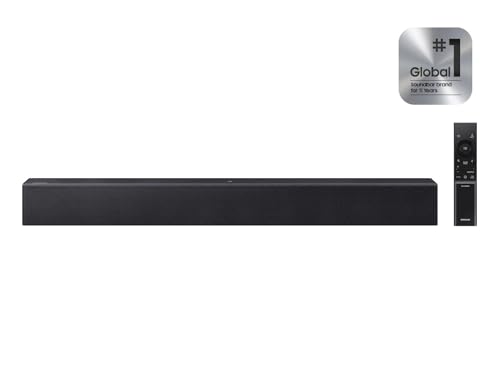
Samsung HW-B400F Soundbar 2.0ch with Built-in Woofer
- ✓ Easy to set up
- ✓ Rich, balanced sound
- ✓ Seamless remote control
- ✕ No separate subwoofer
- ✕ Limited to Samsung TV control
| Speaker Power Output | 2.0 channels with built-in woofer, total power approximately 120W |
| Subwoofer Type | Wireless built-in subwoofer for deep bass |
| Connectivity Options | HDMI ARC, optical input, Bluetooth |
| Sound Enhancement Features | Surround Sound Expansion, Dialogue Enhancement |
| Remote Control Compatibility | Supported Samsung TVs with One Remote Control |
| Dimensions | Approximate dimensions not specified, but designed for standard TV setup |
Many people assume that a soundbar, especially one with a built-in woofer like the Samsung HW-B400F, is just a small upgrade for TV audio. But after setting it up and giving it a real test, I found it does more than fill a room—it transforms your viewing experience.
The moment I plugged it in, I appreciated how straightforward the connection was. HDMI ARC or optical makes setup quick and hassle-free, which is a relief if you’re tired of wrestling with wires.
Wireless Bluetooth streaming from my phone was seamless, and I loved being able to switch between devices effortlessly.
Once powered on, the sound quality immediately impressed me. The full, balanced sound with deeper bass really added punch to movies and music alike.
It’s especially noticeable during action scenes or bass-heavy tracks—nothing feels flat or thin.
The surround sound expansion feature genuinely broadens the soundstage. It’s like the audio opens up, making dialogue clearer and effects more immersive.
I tested the dialogue enhancement, and voices stood out crisply over background noise, which is perfect for late-night TV without cranking the volume.
Using the TV remote to control volume and sound modes felt natural, thanks to compatibility with Samsung TVs. It reduces clutter and keeps things simple.
Overall, this setup makes your TV sound richer and more engaging without complicated wiring or extra remotes.
What Components Do You Need to Set Up Your Samsung Soundbar?
Your TV should support the necessary connections, which typically include HDMI ARC or optical audio ports. This compatibility ensures that you can easily connect the soundbar and take advantage of its audio enhancements.
An HDMI cable is the preferred connection method as it carries both audio and video signals, simplifying the setup process and allowing for better integration between devices.
In cases where HDMI ARC is not available, an optical audio cable serves as a reliable alternative, providing a digital audio connection that still delivers excellent sound quality.
Ensuring that you have a power source is crucial, as the soundbar will need to be plugged in to function. Verify that there is an outlet nearby to avoid any inconvenience during setup.
The remote control is a pivotal part of your experience, as it enables you to adjust various settings and control playback from a distance, enhancing convenience during use.
If you opt for a wireless soundbar, a stable Wi-Fi connection may be necessary for additional features, such as streaming audio from your devices or connecting to smart home systems.
Finally, if you choose to wall-mount your soundbar for a cleaner look or better sound projection, a mounting bracket is essential to ensure that it is securely attached and positioned correctly for optimal audio performance.
How Should You Position Your Samsung Soundbar for optimal Performance?
The best setup for a Samsung soundbar involves careful consideration of its placement and connection to enhance audio performance.
- Wall-Mounting: Mounting the soundbar directly on the wall under your television can provide a clean look and optimal sound distribution. This positions the soundbar at ear level, ensuring that the audio is directed towards the listener for a more immersive experience.
- Placement on Furniture: If wall-mounting isn’t an option, placing the soundbar on a TV stand or shelf is a viable alternative. Make sure it is centered with the screen and not obstructed by other objects, as this can hinder sound quality and clarity.
- Distance from Walls: Keeping the soundbar a few inches away from the wall can significantly improve sound projection and reduce distortion. Sound waves need space to travel, and too close a proximity to walls can lead to muddied audio.
- Using the Right Height: The ideal height for a soundbar is typically at ear level when seated. This positioning helps to align the sound output with the listener’s ears, enhancing dialogue intelligibility and overall sound experience.
- Consider Surround Sound Configuration: For an optimal surround sound experience, position the soundbar with any additional speakers in a way that creates a balanced soundstage. This might involve angling the soundbar slightly towards the seating area or ensuring that other speakers complement it in terms of distance and direction.
What are the Best Connectivity Options for Your Samsung Soundbar?
The best connectivity options for your Samsung soundbar ensure optimal sound quality and ease of use.
- HDMI ARC: This connection allows you to use a single HDMI cable to transmit audio and control your soundbar with your TV remote.
- Optical Cable: An optical cable provides a high-quality digital audio connection that is easy to set up and typically supports multi-channel audio formats.
- Bluetooth: Bluetooth connectivity enables wireless streaming from various devices, such as smartphones and tablets, offering convenience and flexibility in setup.
- Wi-Fi: Wi-Fi connectivity allows for high-quality streaming and integration with smart home systems, providing a seamless audio experience across devices.
- 3.5mm Aux Input: The 3.5mm auxiliary input is a simple and straightforward way to connect devices directly to the soundbar, making it compatible with a range of gadgets like older smartphones or MP3 players.
HDMI ARC (Audio Return Channel) is a popular choice as it simplifies the setup process with fewer cables and allows for features like CEC (Consumer Electronics Control), enabling your TV remote to control both the TV and the soundbar.
Using an optical cable is ideal for those who want a reliable wired connection without sacrificing audio quality, as it can transmit high-quality audio signals without interference.
Bluetooth is perfect for users who prefer a wireless experience, allowing for easy pairing with mobile devices for music streaming without the need for physical connections.
Wi-Fi connectivity is beneficial for users who enjoy streaming services or want to integrate their soundbar into a smart home ecosystem, offering a more versatile audio experience.
The 3.5mm aux input serves as a universal option for direct connections, making it suitable for older devices that may not support newer connection types, ensuring compatibility with a wider range of audio sources.
How Does Using HDMI ARC Improve Your Sound Quality?
Single Remote Control Functionality is a major convenience, allowing users to control both the TV and soundbar with one remote. This feature eliminates the frustration of managing multiple remotes, allowing for a more seamless viewing experience.
Automatic Device Recognition is facilitated by HDMI ARC, which means when you connect your soundbar, the TV will automatically recognize it. This feature saves time during the setup process and minimizes compatibility issues, ensuring that you can enjoy your soundbar right away.
Support for CEC Features enhances the user experience further, as it enables integrated control between devices. This means you can use the TV remote to control playback and volume on the soundbar, making it easier to navigate through settings and enjoy your media without hassle.
What are the Advantages of Bluetooth Connections for Soundbar Setup?
The advantages of Bluetooth connections for soundbar setup are numerous and contribute to a more convenient and flexible audio experience.
- Wireless Convenience: Bluetooth allows for a cable-free connection between your soundbar and devices, eliminating clutter and making setup easier. This is particularly beneficial in home entertainment systems where multiple devices are involved.
- Easy Pairing: Most modern devices support Bluetooth, and pairing them with a soundbar is typically a simple process. Users can connect their smartphones, tablets, or TVs with just a few taps, enhancing user experience without needing complicated setups.
- Portability: Bluetooth-enabled soundbars can be easily moved around without worrying about disconnecting and reconnecting cables. This is ideal for those who may want to reposition their sound system or take it to different locations within their home.
- Multi-Device Connectivity: Many Bluetooth soundbars can remember multiple paired devices, allowing users to switch between them seamlessly. This feature is advantageous for households with multiple users who want to connect their devices without the hassle of re-pairing.
- Compatibility: Bluetooth technology is widely supported across various brands and devices, ensuring that your soundbar can connect to a range of products, from TVs to laptops. This broad compatibility enhances the versatility of your soundbar setup, making it easier to integrate into your existing system.
- Improved Audio Streaming: With advancements in Bluetooth codecs, many soundbars now support high-definition audio streaming, which enhances the overall sound quality. This means that users can enjoy a richer audio experience without compromising on sound fidelity.
How Can You Adjust Audio Settings for the Best Listening Experience?
To achieve the best setup for a Samsung soundbar, several audio settings need to be adjusted for an optimal listening experience.
- Sound Mode Selection: Choose the appropriate sound mode based on the content you’re watching, such as Standard, Movie, or Music. Each mode enhances different aspects of audio; for instance, Movie mode often amplifies dialogue clarity and sound effects for an immersive experience.
- Equalizer Settings: Adjust the equalizer settings to tailor the frequency response according to your preferences. Fine-tuning the bass, midrange, and treble can significantly improve sound clarity and richness, allowing you to enhance or reduce specific audio elements.
- Subwoofer Level Adjustment: If your soundbar includes a subwoofer, set the subwoofer level to balance the bass output with other frequencies. This ensures deep, impactful bass without overwhelming the mid and high ranges, creating a well-rounded audio profile.
- Surround Sound Configuration: Enable any available surround sound features to create a more immersive audio environment. This setting helps simulate a multi-channel audio experience, making you feel surrounded by sound, especially during action scenes or concerts.
- Audio Sync Settings: Adjust the audio sync settings to eliminate any lag between the visual and audio output. Proper synchronization is crucial for maintaining an immersive experience, especially in movies and games where timing is essential.
- Volume Leveling: Activate volume leveling features to maintain consistent sound levels across different audio sources and content types. This prevents sudden volume spikes, providing a more comfortable listening experience without constant adjustments.
What Common Setup Issues Might You Encounter with Your Samsung Soundbar?
When setting up a Samsung soundbar, various common issues may arise that can affect performance and user experience.
- Incorrect HDMI Connections: One of the most frequent issues is improperly connecting the HDMI cables. It’s crucial to ensure that the HDMI ARC (Audio Return Channel) port on both the TV and soundbar is used, as this allows for the best audio quality and control over both devices through a single remote.
- Audio Sync Problems: Users often experience audio lag, where the sound doesn’t match the visuals on the screen. This can typically be resolved by adjusting the audio delay settings on the soundbar or the TV, or by using the soundbar’s built-in features to synchronize audio output.
- Bluetooth Connectivity Issues: When using Bluetooth, users may face challenges with pairing their devices. Ensuring that the soundbar is in pairing mode, and that other devices are within range and not connected to another sound source, can help establish a stable connection.
- Sound Settings Misconfiguration: Sometimes, the sound settings on the TV or soundbar may not be optimized for the best audio experience. It’s essential to check if the sound mode is set correctly (e.g., surround, standard, or night mode) based on the content being played, as well as ensuring any additional features like equalization are adjusted to personal preference.
- Power Supply Issues: A common oversight involves the power supply or power source for the soundbar. Ensuring the soundbar is properly plugged in and that the power outlet is functional can prevent unexpected power failures or inability to turn on the device.
- Firmware Updates: Failing to update the firmware of the soundbar can lead to performance issues or missing features. Regularly checking for firmware updates via the Samsung SmartThings app or the Samsung website can enhance functionality and fix bugs.
- Placement and Surrounding Obstacles: The placement of the soundbar can significantly affect sound quality. It should be positioned at ear level and free from obstructions, as walls or furniture can block sound waves, resulting in muffled audio or poor surround sound effects.
How Can You Enhance Your Home Theater Experience with a Samsung Soundbar?
Enhancing your home theater experience with a Samsung soundbar involves strategic placement, optimal settings, and additional features.
-
Placement: Position the soundbar directly in front of your TV, preferably at ear level when seated. If using wall mounts, ensure it’s close to the television but not obstructing the view.
-
Connectivity: Use HDMI ARC for a clean setup, allowing control of both the TV and soundbar with a single remote. For older TVs, the optical audio connection is a great alternative.
-
Sound Modes: Explore the different sound modes available, such as Surround Sound, Standard, or TV Sound Mode. This can significantly enhance dialogue clarity or expand audio presence during action scenes.
-
Wireless Subwoofer Setup: If your model includes a subwoofer, place it in a corner of the room to maximize bass response. Ensure it’s paired wirelessly for optimal performance.
-
Advanced Features: Take advantage of features like Adaptive Sound, which analyzes the audio content and adjusts settings automatically, and Voice Enhancement, which amplifies dialogue clarity.
By integrating these elements, you can significantly elevate the quality of your home audio experience.
Related Post: